Not all infrared heating behaves the same way.
The most important factor in determining how an infrared system performs — and whether it is suitable for a given space — is wavelength. Choose the right wavelength for the right application, and infrared performs extremely well. Choose incorrectly, and the result is poor comfort, unrealistic expectations, and a system that fails to deliver.
Understanding the distinction between short, medium and long-wave infrared is not a technical nicety. It is the foundation of correct specification.
How Infrared Heating Works
Before examining the three wave types, it helps to understand what infrared heating is and how it differs from traditional convection systems.
Traditional heating warms the air. Warm air rises, cold air settles at floor level, and heat is quickly lost whenever a door or window is opened. Infrared heating works differently: it transfers energy directly to surfaces — walls, floors, tiles, furniture — which then release that warmth back into the space gradually and evenly. The room itself becomes the radiator.
The analogy that describes this most clearly is standing in winter sunshine. The air around you may be cold, yet you still feel warm. The sun’s energy is reaching you directly, not via the air. Infrared heating works on the same principle.
Because surfaces — rather than air — store the heat, occupants can often feel comfortable at air temperatures 2–3°C lower than they would with conventional systems. This is not a marketing claim; it reflects the way the human body receives and perceives radiant heat versus convected heat.
This foundational principle applies across all three infrared wave types. What changes is the intensity, the surface temperature, the effective range, and therefore the correct application.
The Three Types of Infrared
Short-Wave Infrared (IR-A)
Short-wave infrared operates at very high surface temperatures and delivers intense, immediate radiant heat. It is unaffected by air movement, which makes it effective in conditions where convection-based heating has no practical effect at all.
Typical applications:
Outdoor areas
Open terraces
Draughty or exposed environments
Spot heating in spaces where people move in and out quickly
Where it is not suitable:
Short-wave infrared is not appropriate for domestic comfort heating. The intensity of the heat can become uncomfortable during prolonged exposure, and the characteristics of short-wave radiation do not lend themselves to the sustained, gentle warmth required in living spaces. Specifying short-wave infrared for a home or occupied interior is a misapplication of the technology.
Medium-Wave Infrared (IR-B)
Medium-wave infrared offers higher output designed to travel further, making it effective when mounted at height. It sits between short-wave and long-wave in terms of intensity — more powerful than long-wave, but less extreme than short-wave.
Typical applications:
Warehouses
Sports halls
Churches
Large commercial or community buildings with ceiling heights of approximately 3 metres or above
Where it is not suitable:
Medium-wave infrared is too intense for close-range domestic use. In a standard-height residential room, the output is disproportionate to the space, and the comfort profile does not match domestic requirements. Like short-wave, specifying medium-wave for a home interior is an error in application, not just in preference.
Long-Wave Infrared (IR-C / Far Infrared)
Long-wave infrared operates at lower surface temperatures and produces gentle, comfortable radiant heat. Significantly, it closely matches the wavelength that the human body naturally absorbs and emits — which is why it feels natural rather than intense.
Typical applications:
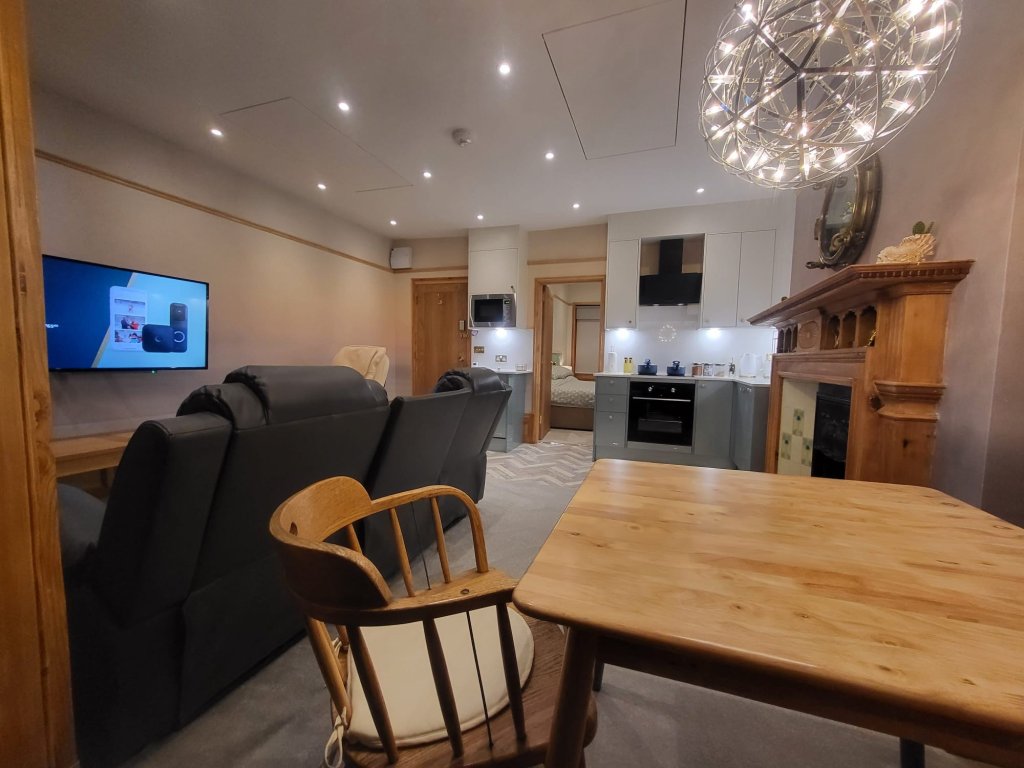
Bathrooms, kitchens and bedrooms
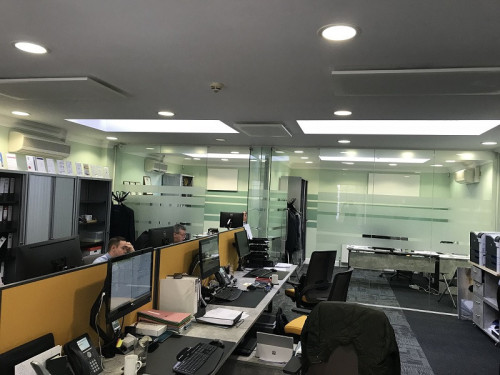
Office
Retail environments and everyday occupied spaces
This is the wave type used for comfort heating in homes and interiors. Long-wave infrared does not require high surface temperatures to be effective. Panels operate quietly, with no moving parts and no air movement, and they warm the surfaces of the room — including walls, floors and furniture — which then sustain the warmth over time.
Choosing the Right Infrared for the Right Space
| Space Type | Infrared Choice |
|---|---|
| Outdoor or very draughty areas | Short-wave |
| High ceilings (3m and above) | Medium-wave |
| Homes and everyday interiors | Homes and everyday interiors Long-wave |
Using the wrong type of infrared for a given space will result in poor comfort and unrealistic expectations. When the correct wavelength is matched to the correct application, infrared performs extremely well.
Why Long-Wave Infrared Works Well in Domestic Settings
In spaces with solid surfaces — tiled bathrooms, plastered walls, solid floors — long-wave infrared has a particular advantage. The surfaces absorb and store heat effectively, releasing it gradually into the room rather than allowing it to disperse through air movement.
In bathrooms specifically, this characteristic translates into practical benefits: tiles and walls warm quickly, condensation is reduced, and there are no cold draughts following a bath or shower. The heating operates silently, with no fans, no circulation noise, and no movement of air that might carry humidity or cause discomfort.
In kitchens, bedrooms and offices, long-wave infrared supports zoned heating — the ability to heat rooms independently and only when occupied. Because the heat is stored in the building fabric rather than in the air, it also recovers quickly after doors or windows are opened.
Across all these settings, the principle is the same: you are warming the surfaces you live and work with, not just the air around you.
Correct Specification Requires More Than Wavelength Selection
Infrared is a well-established heating technology, applied correctly across a wide range of residential and commercial settings. But the wavelength decision is one part of a broader assessment.
At ARC Thermal Solutions, we evaluate each project on its specific characteristics before making any recommendation: building fabric and insulation levels, ceiling height, room geometry, usage patterns and occupancy schedules all influence which solution is appropriate and how it should be configured. Infrared is highly effective when it is applied correctly — and correct application begins with understanding the building, not simply selecting a product.